
Chef Berty Richter breaks down the comfort and care that goes into every piece of pillowy Shishbarak goodness at Ladino, and its story in history as the ultimate comfort food.
The Story Behind Shishbarak
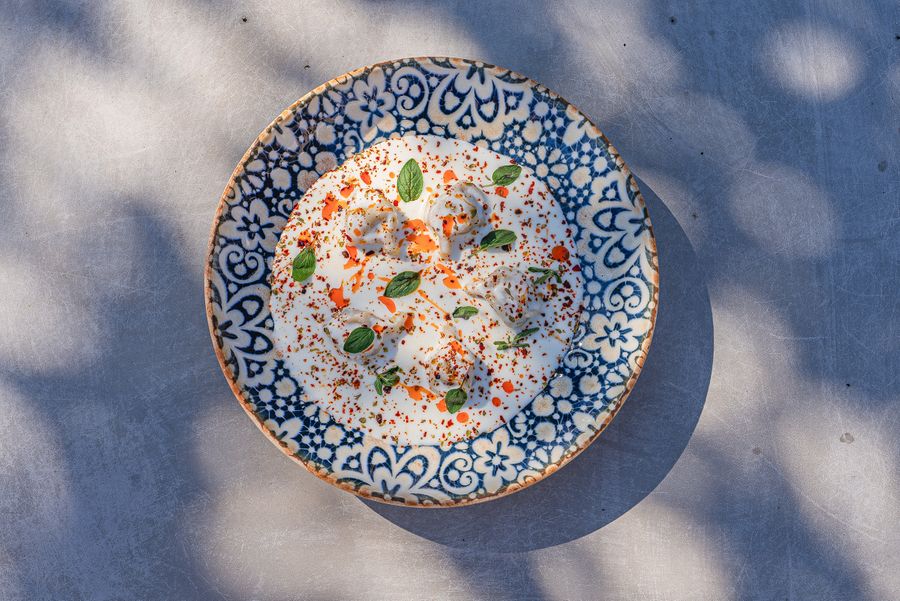
When your belly is warm and you are surrounded by friends or family, there is a feeling of fullness and satisfaction that settles your soul.
Maybe at that very moment, the Spurs are playing, the weather is cool, crisp and invigorating. If you are at Ladino, you may look down and have an empty bowl of shishbarak, very deliberately cleaned by pita bread. A thought crosses your mind, “I want another bowl!”
Linguistically, the term shishbarak carries rich Arabic roots, having evolved through ancient Persian and Turkic influences over time. Translated in modern terms it refers to a small, unleavened dough pocket, stuffed with seasoned ground meat and cooked with yogurt sauce. The origin of the word can be broken down to “shish” meaning skewer and “borek” for stuffed dough. In Turkey it is called Manti.
“[Shishbarek] is one of the most comforting dishes that we have on the menu and why it has been on the menu since day one.”
-Chef Berty Richter
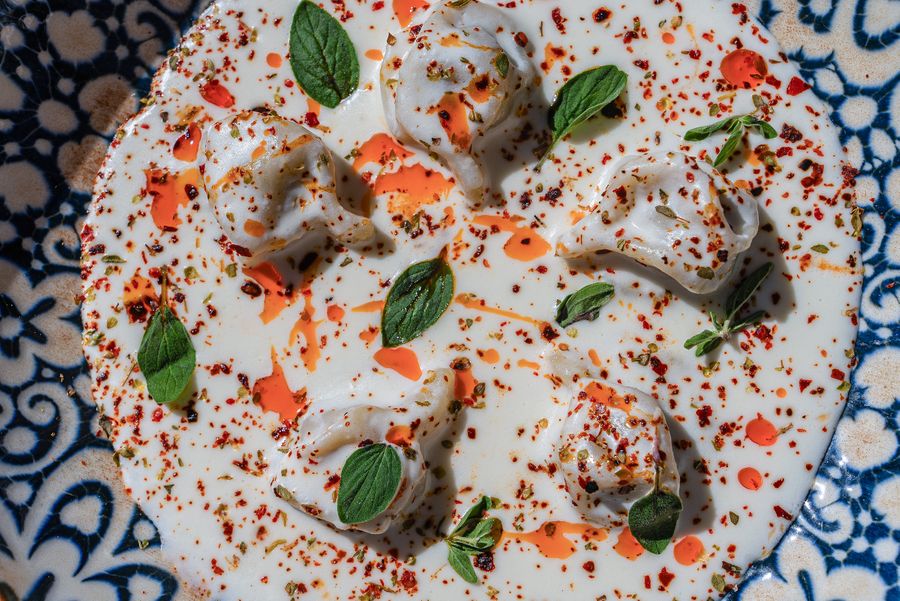
The main ingredients shared between Shishbarak and Manti are: yogurt sauce, dumplings, red pepper flakes and always herbs and spices. Shishbarak is also one of the staple dishes on the menu at Ladino. Our version nestles 5 hand-rolled beef and lamb dumplings into tomato puree, ladling warm yogurt sauce over them with smoked chili oil drizzle and fresh oregano leaves on top. As soon as the aromas find their way to you, the outcome is nothing less than love and affection in a bowl.
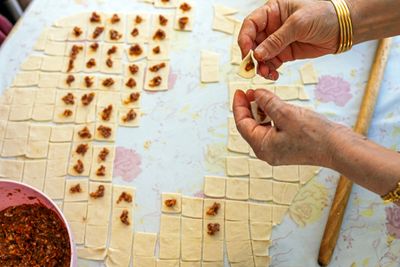
“In Turkey you can walk by a storefront and you can see maybe a dozen older ladies sitting on this bench. They have this giant table sitting in front of them and there are these large sheets of pasta they cut into half-inch cubes,” says Chef Berty Richter, who has an imprinted memory of eating these dumplings from famous manti houses in Turkey. “Then very, very skillfully and very, very fast, putting filling in each one, grabbing them and making a little pocket.”
“We make the pasta dough fresh everyday. It gets rolled out, cut and filled in-house. Normally it takes about 4 hours to complete. It is important for the chef practicing it to be trained well and comfortable to take on a task like that,” says Chef Richter, exclaiming, “Talk about labor intensive! It is very tedious, sometimes five hours a day, because we go through so much of it—at times selling 1,000 dumplings a week!”
For home cooking, you can buy the little pasta shells and add your desired meat filling, then cook them in water as Chef Richter’s grandmother and mother did. This cuts down on the preparation time in the kitchen. When you cook the dumplings, the water holds the flavor of the meat and pasta together. The strained pasta water becomes an important ingredient for the shishbarak on the menu at Ladino.
The water helps maintain a consistency of yogurt sauce that is light and juicy. “We add a little bit of the pasta water to the yogurt sauce and pour it over the spicy tomato paste, finish that with oregano and aleppo pepper.” For the filling itself, the beef and lamb mixture combines grated onion, salt, pepper and cumin. “Add a little bit of lamb fat to the sauce for texture as it emulsifies with the yogurt.” Chef Richter explains ”Giving it that Middle Eastern style and depth.”
“It is one of the most comforting dishes that we have on the menu and why it has been on the menu since day one.” says Chef Richter. There is no doubt that people love the comfort that this dish holds. Let this be a sign to come and join us around the table for a bowl of shishbarak, a dish made from passion and dedication. A dish bestowed to us as warmth, just like an abuela, nona or grandma might do in her kitchen.